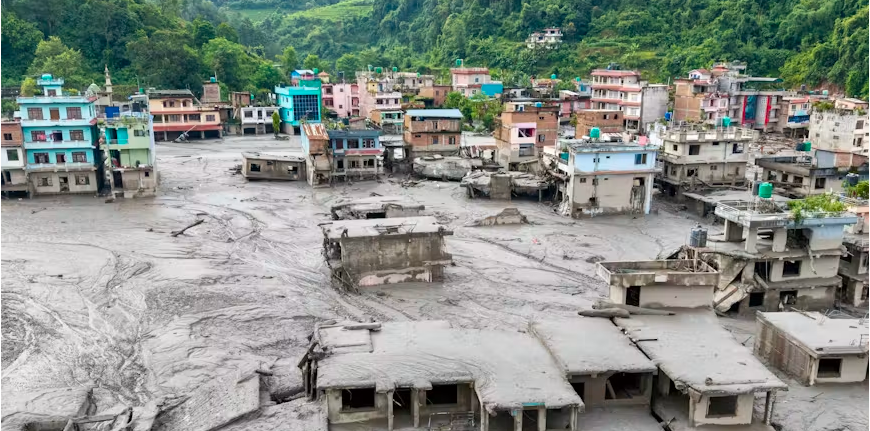
Nearly 700 people are dead and more than 3,000 remain missing after catastrophic flash floods swept across parts of Nepal and Tibet, as bad weather continued to hamper rescue efforts and Nepal sought specialised foreign assistance.
The combined death toll rose to 691 after Chinese authorities reported 16 deaths in Tibet and Nepal’s disaster agency raised its toll to 675. China reported 546 people missing, while Nepal said 2,498 remained unaccounted for.
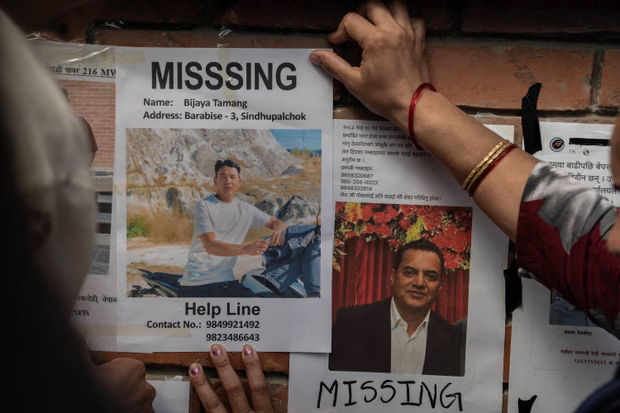
More than 3,700 people have been rescued in Nepal, but the scale of the disaster has left families still searching for relatives and authorities struggling to identify recovered bodies.
The missing include 517 foreign nationals and 933 workers at hydropower projects along a river hit by the torrent. At least 45 Nepali army soldiers and 40 police officers involved in rescue operations are also missing.
Seven bodies have been recovered from rivers in neighbouring India and are believed to be among those swept downstream from Nepal.
Rescuers battle mud, rain and fog
The rescue effort has been complicated by heavy rain and thick fog, which temporarily halted aerial operations and made it difficult for teams to reach isolated communities.
In Nepal’s Rasuwa district, rescuers have been working to reach more than 100 people trapped inside a hydropower tunnel. More than 350 people have already been evacuated from the site, but officials have described the operation as extremely difficult.
Rescuers have been using drilling equipment to work through thick layers of mud as they search for people inside the tunnel.
Kawan Koirala, a rescue worker with the Nepal Scout Disaster Response Team, said teams were struggling to move through the mud after working for long hours.
“People want their family member’s body back, either dead or alive, but we cannot find them,” he told Agence France-Presse.
Search operations resumed on Saturday after rain and fog eased.
Nepal asks neighbours for specialised help
As the disaster response enters a more difficult phase, Nepal has asked other countries for technical assistance but said it does not currently need outside teams for general search and rescue.
Foreign Minister Shisir Khanal said Nepal needed help restoring transport and communications where bridges had been destroyed, identifying bodies, conducting DNA testing, storing bodies and rescuing people trapped in tunnels.
Nepal has asked India and China to provide Bailey bridges after about two dozen bridges were destroyed by the floods.
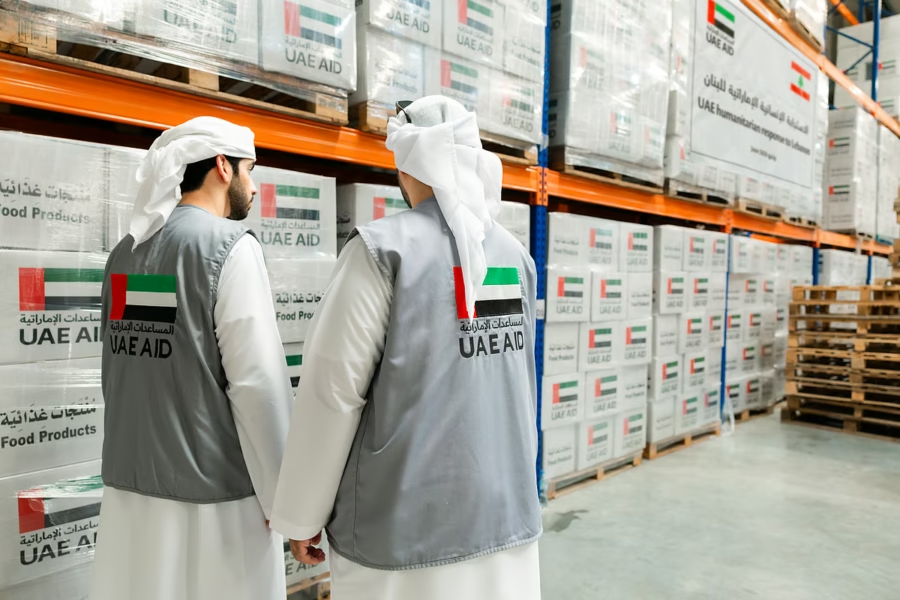
India has sent relief supplies, including food, medicines, blankets and water purification tablets, as well as a specialised tunnel rescue team. China has also sent tunnel-rescue experts from Tibet to Nepal.
The requests underline the scale of the damage confronting Nepal as rescuers move from immediate evacuations towards recovering the dead and restoring access to isolated communities.
New flood risks remain
The danger has not passed. Nepal is monitoring two barrier lakes upstream from the disaster zone, with authorities warning that flooding could continue until the lakes drain.
Satellite images showed one of the lakes growing larger without a visible outlet, raising concerns about increasing water pressure. Chinese authorities said the first lake was shrinking, but a Chinese geohazards expert warned that it could remain unstable.
The wider region also contains more than 100 glacial lakes that could pose additional risks, according to Chinese authorities.
In Tibet, the destruction around the Gyirong border crossing has highlighted the scale of the flooding. When Chinese rescuers reached the site on Friday, they found much of the complex destroyed.
The crossing is strategically important as a major route linking China with South Asia and forms part of China’s Belt and Road network.
Rebuilding could cost billions
The disaster has affected more than 90,000 people, according to the Red Cross, while Nepal’s finance minister, Swarnim Waglé, estimated that rebuilding could cost between $4 billion and $5 billion.
The immediate priority remains finding survivors and accounting for thousands of missing people. But with homes, roads, bridges and power infrastructure destroyed, Nepal is already facing a long and expensive recovery.
For families still searching for relatives, however, the immediate concern remains much more basic: finding out who survived and recovering those who did not.