Chad has raised its military alert in its eastern border region to the highest level after two airstrikes this month that it blames on the Sudanese Armed Forces, returning attention to the foreign suppliers behind an air campaign that Turkey has largely equipped.
The first strike came at about 8 p.m. on 20 August. The Chadian General Staff said aircraft and drones pursued a convoy of vehicles across the border and bombed it in the Mourdi department of Ennedi-Est province, more than 100 kilometres inside Chadian territory. General Alchanan Issakha Acheikh, director of military information for the Chadian army, said the available information indicated the aircraft belonged to Sudanese forces or to allied groups.
A second strike on 27 August hit a fuel market near Antikong, killing 12 people and wounding seven.
Chad has warned Sudan against carrying the fighting across the frontier and said it reserves the right to defend its territorial integrity. The African Union has also called on all parties to show restraint.
However, Sudan’s foreign ministry had rejected the accusation, saying it was surprised its armed forces had been blamed before any professional and independent inquiry.
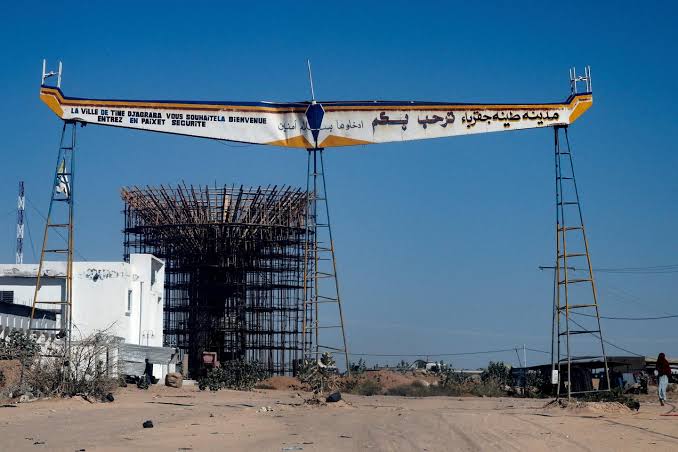
The strikes follow an attack in March, when a drone strike from Sudan killed 17 people in the Chadian border town of Tiné, among them mourners at a funeral. Chad closed its border with Sudan and placed its military on alert after that attack.
Massad Boulos, the US president’s senior adviser for Arab and African affairs, condemned the August strikes. Boulos said the US government opposed the expansion of violence beyond Sudan’s borders and that there is no military solution to the conflict. He called on the warring parties to accept a humanitarian truce, protect civilians and allow aid through, and urged the UN Security Council to extend the arms embargo, which currently applies only to Darfur, across the whole of Sudan.
No evidence has emerged publicly that a Turkish-made aircraft carried out either strike inside Chad. The Sudanese army’s air component however, is largely foreign-supplied with Turkey as its principal supplier.
The Turkish connection
French newspaper Le Monde reported on 26 August that Turkey has become the SAF’s principal military backer since the war began, supplying Bayraktar TB2 and Akıncı drones and deploying instructors alongside them. The paper reported that Saudi Arabia financed the purchase of both the Turkish drones and Pakistani weapons for the Sudanese army, including a $1.5 billion contract covering fighter jets, armoured vehicles and drones.
On 7 August, Saudi Arabia, Turkey and Pakistan signed the Makkah Joint Defense Agreement, under which an armed attack on any one of the three would be treated as an attack on all three. Le Monde reported that cooperation among the three governments over Sudan predates the agreement.
The Washington Post reported in March 2025 that the Turkish defence company Baykar had supplied the Sudanese army with at least $120 million worth of equipment, including TB2 drones and hundreds of warheads. The investigation drew on contracts, correspondence, registry records and visual material, and documented Baykar personnel providing technical support inside Sudan.

Turkish TB2 and Akıncı airframes have been part of the Sudanese arsenal since late 2024. The SAF has also flown Iranian-made Mohajer-6 drones.
Chatham House examined the reported deliveries in a paper published in May 2026, noting Ankara’s denial that it supplies the Sudanese army directly. In June, President Recep Tayyip Erdoğan received the Sudanese army chief Abdel Fattah al-Burhan in Ankara. The Turkish presidency said afterwards that the two governments were seeking to expand cooperation in trade, agriculture, energy and defence.
Turkey’s interest in Sudan predates the war. President Erdoğan’s visit to Omar al-Bashir in 2017 produced an agreement to redevelop the Red Sea port of Suakin and Turkish officials pressed them for greater investment in the country.
Sudan’s eventual reconstruction will require major investment in infrastructure, energy and agriculture, while its Red Sea coastline and mineral wealth offer strategic and commercial opportunities to countries seeking influence in the country.
Foreign powers are therefore shaping not only the course of the war but also the competition over Sudan’s future and Turkey’s expanding relationship with the SAF forms part of that broader contest. The recent strike inside Chad underscores how the conflict’s regional consequences are becoming increasingly difficult to contain within Sudan’s borders.