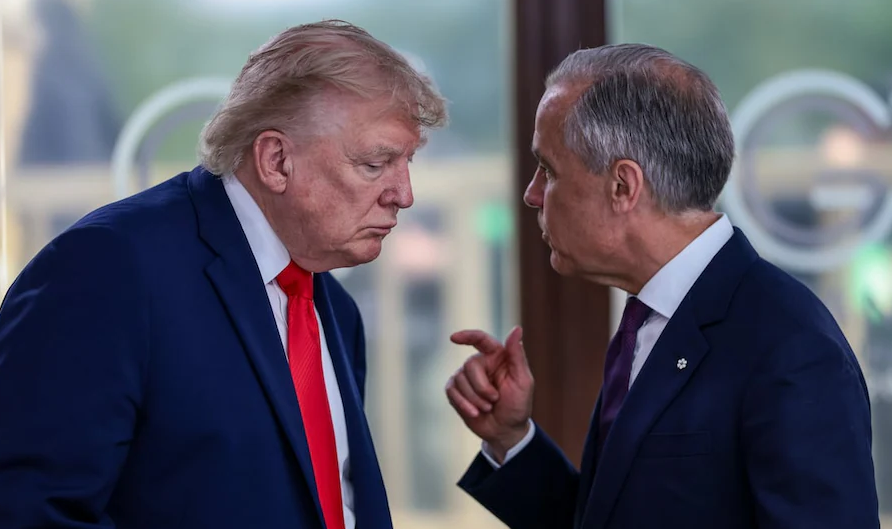
President Donald Trump’s latest tariffs on Canada rely on a 96-year-old provision that has never been used by a US president or tested in court, raising questions over whether the administration can legally sustain the new trade measures.
Trump last week invoked Section 338 of the Tariff Act of 1930 to impose a 50% tariff on about $20 billion worth of Canadian imports, accusing Ottawa of discriminating against US dairy, automobile and alcoholic beverage exports.
Canada responded with dollar-for-dollar retaliatory tariffs, adding another strain to relations between the two longtime allies.
The provision Trump is relying on has never been used, leaving courts with no direct precedent for interpreting its scope.
“This law is literally a blank canvas because it’s never been litigated,” said Ryan Majerus, a partner at King & Spalding and a former US trade official.
That legal uncertainty could become significant if businesses challenge the tariffs. Some trade lawyers argue that Section 338 may have effectively been displaced by later trade legislation that gave presidents narrower tariff powers and established additional procedural requirements.
Trump revives a Depression-era tariff power
Section 338 was included in the Smoot-Hawley Tariff Act of 1930, the legislation that dramatically increased US tariffs during the Great Depression.
The law was intended to protect American farmers and manufacturers as the US economy deteriorated. Its tariffs later became notorious among economists and historians for contributing to a collapse in global trade.
Trump, who has embraced the label “Tariff Man”, has disputed that interpretation and argued that the Smoot-Hawley tariffs came too late to prevent the economic crisis.
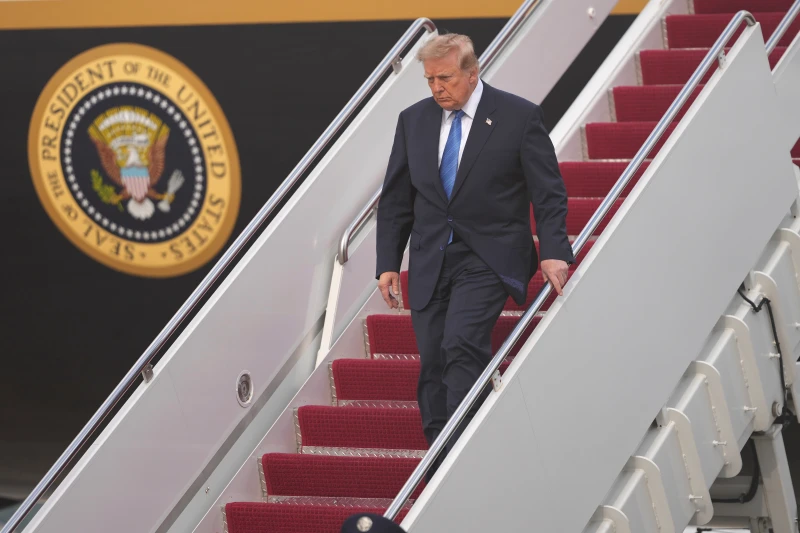
Congress also gave the president a new authority under Section 338, allowing tariffs of up to 50% on imports from countries found to be discriminating against US businesses. Yet no president had actually used the provision before Trump.
Legal scholars Peter Harrell and Jennifer Hillman of Georgetown University wrote in Reason that few trade lawyers were even aware until Trump’s second term that Section 338 remained in force or understood what it allowed.
They found that the US considered using the provision against Spain in 1932 and Communist China in 1949, but ultimately did not impose tariffs under the law.
US trade policy later shifted toward negotiated agreements and other statutory mechanisms for addressing foreign trade barriers, leaving Section 338 largely unused.
Later laws could complicate Trump’s case
The biggest legal question may be whether Congress effectively replaced Section 338 when it enacted newer trade laws.
The Trade Expansion Act of 1962 gave the president authority to impose tariffs on national-security grounds, while the Trade Act of 1974 created another mechanism for responding to what the US considers unfair foreign trade practices.
Those laws also impose conditions and procedural requirements before presidential tariff powers can be exercised.
“There is a very strong argument that (Section 338) was superseded,” said Sara Albrecht, CEO of the Liberty Justice Center, which represented businesses that successfully challenged earlier Trump tariffs before the Supreme Court.
Albrecht said the existence of the later laws raises an obvious question: if Congress intended Section 338 to remain available, why did it subsequently create more specific presidential tariff authorities?
Canada tariffs face other legal questions
Trade lawyers have also questioned whether the new tariffs satisfy Section 338 itself.
Harrell and Hillman argue that the provision authorizes tariffs designed to offset the harm caused by discriminatory foreign trade practices. But the Trump administration did not calculate the value of the alleged damage to US farmers, automakers and alcohol exporters before imposing the tariffs, according to their analysis.
The tariffs also apply to Canadian goods that are unrelated to those sectors, including hockey sticks and cement.
Another issue is Canada’s dairy system. Ottawa imposes high tariffs on dairy imports exceeding agreed quotas, but the system applies to imports from multiple countries rather than exclusively targeting US producers.
The US also agreed to the basic arrangement under the US-Mexico-Canada trade agreement negotiated during Trump’s first term.

Harrell and Hillman described it as “incongruous” for Washington to now characterize as discriminatory terms it previously accepted.
John Veroneau, a former general counsel for the US Trade Representative, takes a different view.
He said Section 338 can apply when another country discriminates against US imports by imposing higher tariffs than it applies to comparable imports from other countries.
Canada’s retaliation against previous US tariffs could itself strengthen the administration’s argument, Veroneau said.
“Courts will rightly feel obliged in the face of any challenge (to) decide: Are the statutory requirements met or are they not met,” he said.
Businesses have yet to challenge the tariffs
Trump’s other tariff initiatives have already faced significant legal setbacks.
In February, the Supreme Court struck down his broadest tariff programme, which had relied on a 1977 national-security law to impose tariffs on imports from almost every country.
Trump then introduced a new set of tariffs to replace the lost revenue. A specialised trade court in New York rejected those measures as well, although the government was permitted to continue collecting the tariffs while the case proceeds.
Section 338, however, has yet to reach the courts.
The Liberty Justice Center has been searching for businesses willing to challenge the Canada tariffs, but finding plaintiffs prepared to sue the federal government has proved difficult.
“I haven’t had a lot of response from plaintiffs,” Albrecht said. “Anytime you want to sue the government, it’s a hard proposition.”
The relatively narrow scope of the Canada tariffs may also make a legal challenge harder to mount. The measures affect about 5% of Canadian imports, far less than Trump’s sweeping 2025 tariff programme, leaving fewer businesses directly exposed to the new duties.
There is also the possibility that the dispute will be settled before the courts resolve the legal questions.
The US and Canada broke off trade talks on Aug. 21, but could return to negotiations.
“I’m hopeful that somebody blinks, that they come to some agreement and it all goes away,” Albrecht said.
The legal status of Section 338 may therefore remain unresolved unless a company decides to take the administration to court.