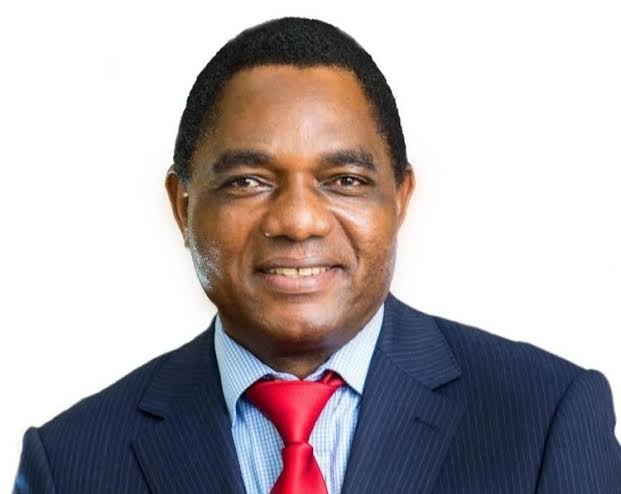
Zambia’s President Hakainde Hichilema has been sworn in for a second five-year term following an election contested by his main opponent and the arrest of opposition figures on treason charges.
Hichilema won the August 13 election with 60% of the vote, according to official results, defeating Brian Mundubile, who received 38%. Mundubile alleged that the results had been manipulated but was unable to challenge the outcome in court after the courts were sealed off on the final day for filing an election petition.
International observers largely described polling day as peaceful but raised concerns about the vote-counting process.
European Union observers said election staff at several tallying centres did not consistently record results on paper tally sheets immediately after they were announced. They also pointed to weak verification between digital results and paper records and said returning officers repeatedly suspended proceedings while waiting for instructions from the electoral commission’s headquarters.
The dispute has been compounded by the government’s treatment of the opposition since the election.
The day after voting, security forces raided a property in Lusaka linked to Mundubile, killing a former cabinet minister and arresting several opposition politicians. Authorities accused the opposition of preparing an armed insurrection, a claim they denied.
Mundubile and his running mate, Makebi Zulu, subsequently went into hiding before being detained and charged.
Hichilema did not directly address his main opponent’s detention during his inauguration speech but warned against allowing political competition to threaten Zambia’s stability.
“The pursuit of political power must never come at the expense of peace, security and stability in our country,” he said.
He also called for cooperation with the opposition, saying: “Democracy does not require us to agree on everything. It requires us to respect one another even when we disagree.”
The president’s second term begins against the backdrop of an economic record that has helped strengthen his standing among investors.
When Hichilema took office in 2021, Zambia had recently defaulted on its international debt and inflation was above 24%. His government subsequently negotiated a restructuring of the country’s debt and sought to rebuild relations with international creditors.
Inflation has fallen, although the cost of living remains a major concern for many Zambians.
Hichilema, a former businessman, has now promised to shift the focus from economic stabilisation to faster growth.
“We are moving from stabilisation to growth,” he said during his inauguration.
“Having done the heavy lifting in our first term, the next five years is all about growth and prosperity for all our people.”
Copper will be central to that ambition. The metal accounts for about 15% of Zambia’s gross domestic product and more than 70% of its exports, according to the World Bank.
A rise in copper prices has strengthened the outlook for the country’s economy and helped maintain investor interest despite the political controversy surrounding the election.
Hichilema therefore begins his second term with two contrasting challenges. He must build on the economic gains of his first five years while addressing growing concerns over the credibility of the election and the treatment of political opponents.
How his government handles that balance could shape both Zambia’s economic prospects and its democratic trajectory over the next five years.