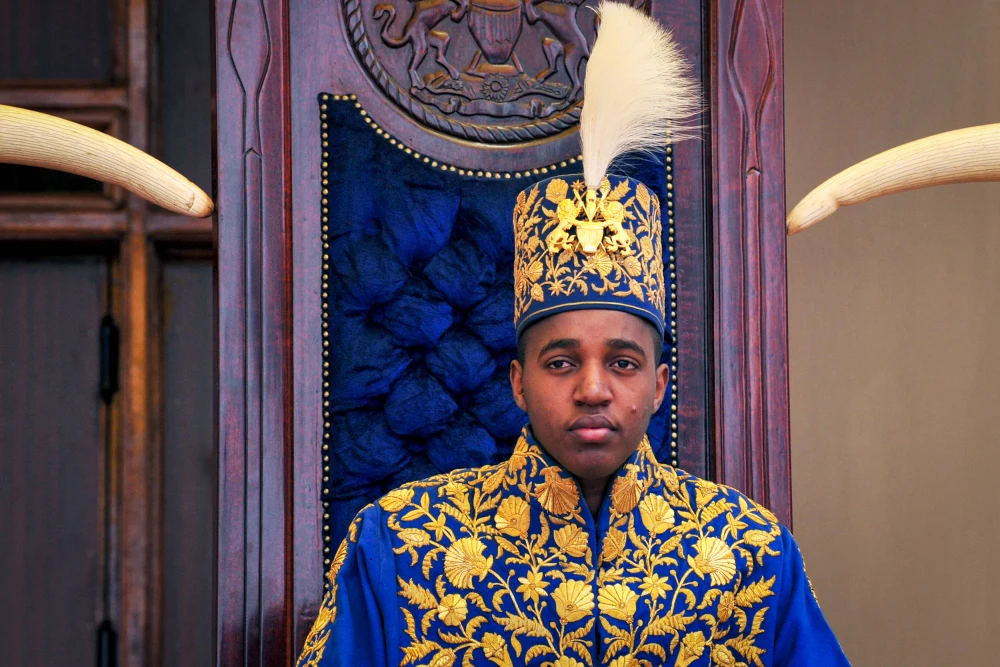
Oyo Nyimba, who became king of Uganda’s ancient Tooro Kingdom at the age of 3, has died at 34. King Oyo grew up from a globally recognised boy monarch into a quiet guardian of his kingdom’s traditions,
His death was announced by Tooro Kingdom Prime Minister Calvin Armstrong Rwomiire Akiiki after the monarch died on Thursday night while receiving medical treatment in the United States. The cause of death has not been disclosed.
“The continuity of the Crown is assured,” Rwomiire said in a statement. “His Majesty leaves behind a Prince as his heir, whose identity will be formally revealed at the appropriate time, in accordance with the traditions and customs of Tooro Kingdom.”
The announcement shocked many Ugandans who had not known that the king was critically ill. Tributes poured in across the country as news of his death spread.
“This is very difficult to comprehend,” Deputy Parliament Speaker Thomas Tayebwa said.
Oyo’s life had been extraordinary from the beginning. His father, King Patrick David Matthew Kaboyo Olimi III, died suddenly in August 1995. Less than three weeks later, the 3-year-old heir was installed as the Omukama, or king, of Tooro.
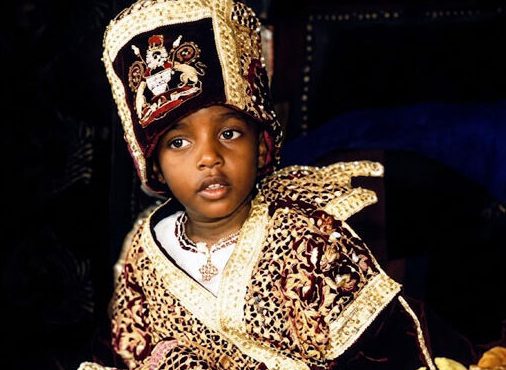
He became the world’s youngest reigning monarch, a distinction that brought international attention to a child who was still too young to understand the institution he had inherited.
At his installation, Oyo underwent traditional royal rituals and was given the full name King Oyo Nyimba Kabamba Iguru Rukidi IV. The young king was subsequently governed through regents until he reached adulthood.
The boy king became a familiar presence at Ugandan state occasions and was introduced to visiting political figures and foreign dignitaries. His unusual position also brought him into contact with powerful figures beyond Uganda.
Among them was Libya’s Moammar Gadhafi, who developed a relationship with the Tooro royal family and visited Uganda several times before his death in 2011.
But the fascination with the child monarch gradually faded as Oyo grew older.
When he turned 18 in 2010, he formally assumed the duties of the king in a ceremony in Fort Portal. From then on, he became less a global curiosity and more a cultural figure for the Batooro, the people of Tooro.
Oyo was known for keeping his private life away from the spotlight. He remained unmarried and was often described in Uganda as one of the country’s most eligible bachelors.
His marital status was still a subject of public amusement. In September, Parliament Speaker Anita Among reportedly offered to pay his bride price whenever he decided to marry. The king responded with a smile from his throne.
The contrast between the spectacle of his childhood and the privacy of his adulthood became part of Oyo’s public image. He had inherited a throne before he could understand it, grown up under intense public attention and eventually settled into a quieter role as custodian of his people’s heritage.
That role reflects the unusual place traditional monarchies occupy in modern Uganda. The Tooro Kingdom dates back to the 19th century and was abolished by the Ugandan government in 1967, along with the country’s other traditional kingdoms. It was restored in 1993, but the restored monarchies were given cultural rather than executive political roles.
The king therefore did not govern Uganda or exercise the powers of an elected political leader. His influence rested largely on his position as a custodian of Tooro’s history, culture and identity.
Tooro is centred in western Uganda, around Fort Portal, and its people are known as the Batooro. The kingdom extends across an area near Uganda’s border with the Democratic Republic of Congo.
Oyo’s death now opens another chapter in that history. The kingdom says a prince will inherit the throne, although his identity will be disclosed according to Tooro customs. For the second time in a generation, the ancient kingdom is preparing to place a young heir at the centre of its royal institution.
Oyo inherited Tooro’s throne as a 3-year-old. His successor will inherit it carrying the memory of a king whose entire life was shaped by the extraordinary circumstances of becoming a monarch before he was old enough to understand what that meant.