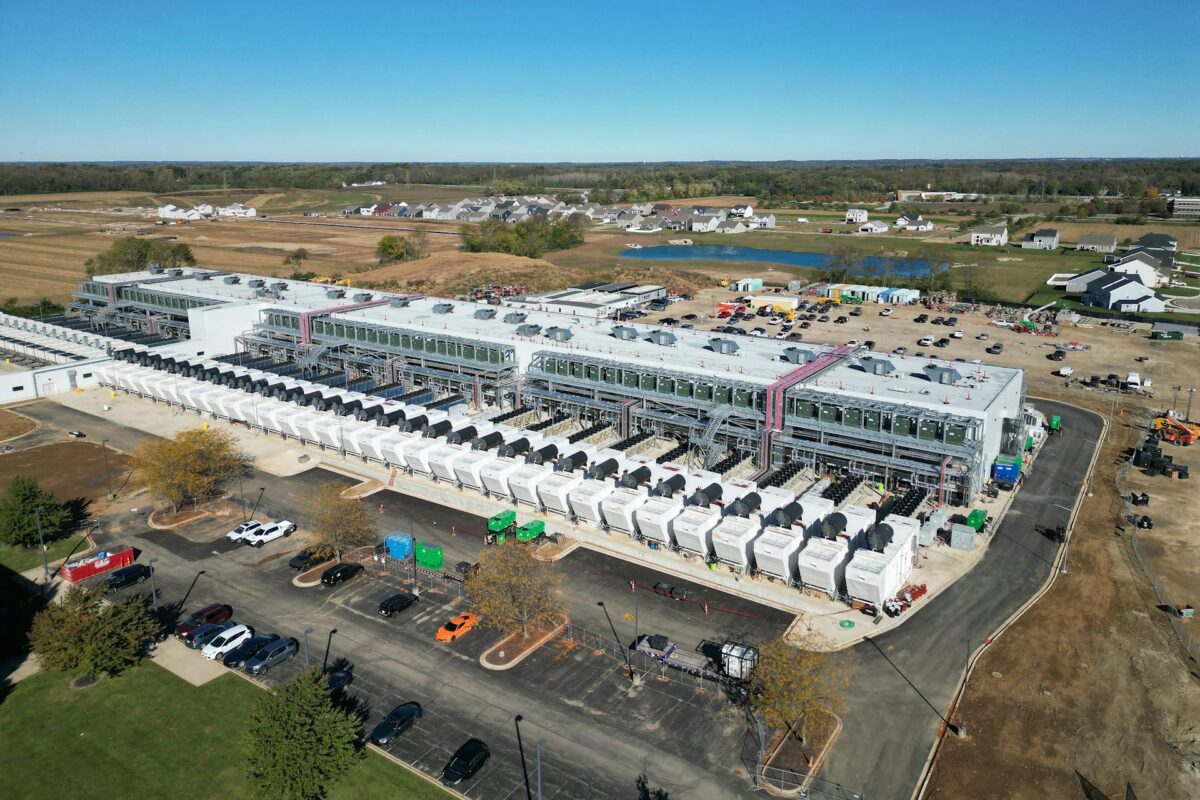
Data centers require enormous investments: land, buildings, computer equipment and power infrastructure. Yet, once they’re up and running, they tend to employ no more than a few dozen people in occupations such as IT technicians, engineers and security guards. With billions of dollars flowing into new data centers across the United States, communities are asking what they will get in return.
Skepticism about the local benefits of data centers is contributing to growing opposition to their construction, from Ohio to Texas. That pushback contributed to delays or cancellations of US$156 billion in proposed data center projects in 2025 alone.
We are professors who study real estate and urban economics, including how large place-based investments shape local economies. So we set out to answer a question at the center of these fights: Do data centers actually create jobs where they are built?
To find out, we teamed up with four colleagues to study what happens to local employment after data centers open. We found that new data centers that opened from 2000-2023 created 1,000 to 1,300 jobs in the counties where they are located, on average. But those jobs, which are for work performed outside data centers rather than inside them, take a few years to appear. They are mostly in industries that support data centers, not in restaurants or shops.
How data centers create local jobs
Data centers can create jobs in at least three ways beyond employing people who work inside them.
First, they can increase demand for local suppliers, from security companies that protect the facilities to electrical contractors that maintain their equipment.
Second, data center employees and workers at these suppliers may spend more money locally, supporting restaurants, stores and other local services.
Third, companies already operating data centers may expand their facilities, while other operators may decide to build nearby. Once a location has the electricity, fiber connections and other infrastructure needed to operate a data center, further investment may become easier.

Noah Berger/Getty Images via Amazon Web Services
Tracking data centers and jobs
We assembled detailed information on 1,584 U.S. data centers that opened between 2000 and 2023. For each facility, we recorded its location, opening date and power capacity, which is a standard way to compare facilities of different sizes. We then matched these records with federal data on employment, wages and the number of businesses in each county.
Isolating the effect of data centers isn’t straightforward. Operators don’t choose locations randomly. They look for reliable electricity, fiber connections, available land and friendly local regulations. Those places may already be growing, so new jobs might have appeared even without a data center.
To account for this, we tracked employment in counties that received data centers – such as Loudoun County in Virginia, Berkeley County in South Carolina, Morrow County in Oregon, and others – before and after the operation of the facility began. We then compared those trends with similar counties that did not receive data centers. We also looked at whether larger facilities brought bigger job gains.
Jobs appear, but not immediately
During the first two years after a county’s first data center opened, we found little change in employment outside construction. After that, jobs begin to grow. Three to five years after a center opened, we found that these counties had roughly 1,000 to 1,300 additional nonconstruction jobs than comparable counties without data centers.
Bigger investments brought bigger employment gains. Five years after new data center capacity is installed, each additional megawatt is associated with about 7.4 more nonconstruction local jobs.
Part of that gain, however, reflects further expansion. Each megawatt installed is associated with another 1.7 megawatts of capacity over the following years. Once that later growth is counted, our estimates work out to about 2.7 nonconstruction jobs per megawatt of eventual data center capacity. A large 100-megawatt facility, for example, would be correlated with roughly 275 additional local jobs outside the data center itself.

Brandon Bell/Getty Images
Jobs are not where you might expect
The types of jobs created help explain what is happening.
Employment gains are concentrated in transportation and warehousing, professional and technical services and real estate. These industries may serve or benefit directly from data centers or from the investment and infrastructure they bring.
By contrast, we found little evidence of job growth in restaurants, stores and other local services.
We also found that more data center investment tends to follow in the same county. Most often, the companies already operating in a county expand their facilities. Other companies generally don’t move into that same area to build new data centers.
Jobs are only one side of the equation
Our study has limits. It covers data centers that opened through 2023, before the current wave of massive facilities were built to power AI. Larger data centers do not necessarily create proportionally more jobs, so our findings may not apply to today’s biggest projects.
We also looked only at job gains and did not explore whether data centers are worth their cost to local communities. These facilities consume large amounts of electricity and water, can generate noise and may receive substantial tax breaks from local and state governments. We did not address any of those concerns.
Our findings do show that data centers can create jobs beyond the small number of people working inside their walls. But that does not mean every one of them is a good deal for their local community. And whether those additional jobs justify the costs remains an open question.

Simon Buechler receives funding from the Real Estate Research Institute (RERI).
Lyndsey Rolheiser receives funding from the Canadian Mortgage and Housing Corporation (CMHC) and the Real Estate Research Institute (RERI).