For many southwestern Pennsylvania students, this school year has already included days away from the classroom because of the buildings themselves. Mold has closed schools in at least four districts, and early September heat pushed 35 Pittsburgh Public Schools buildings to remote learning.
The problems aren’t limited to the region: A 2025 statewide study found that environmental hazards, including mold, lead and radon, are widespread in Pennsylvania schools.

Paul J. Richards/AFP Collection via Getty Images
The age and upkeep of these school buildings affect students’ health and their ability to learn. Kids spend more than 1,000 hours in school each year; students tend to do better in schools with healthy indoor environments.
I’m an epidemiologist who studies how environmental exposures affect health, with a focus on western Pennsylvania.
Sick old facilities
Mold caused the most widespread disruptions. Monessen City School District, Laurel Highlands Middle School, Ligonier Valley School District and Homer-Center School District all delayed the start of school this year or canceled in-person classes due to mold in school buildings that needed to be removed.
Central Valley School District in Beaver County is currently under construction for asbestos abatement in its middle- and high-school buildings – both built in the 1960s. Students are still attending school in both buildings despite the abatement.

William Morgan/iStock Collection via Getty Images Plus
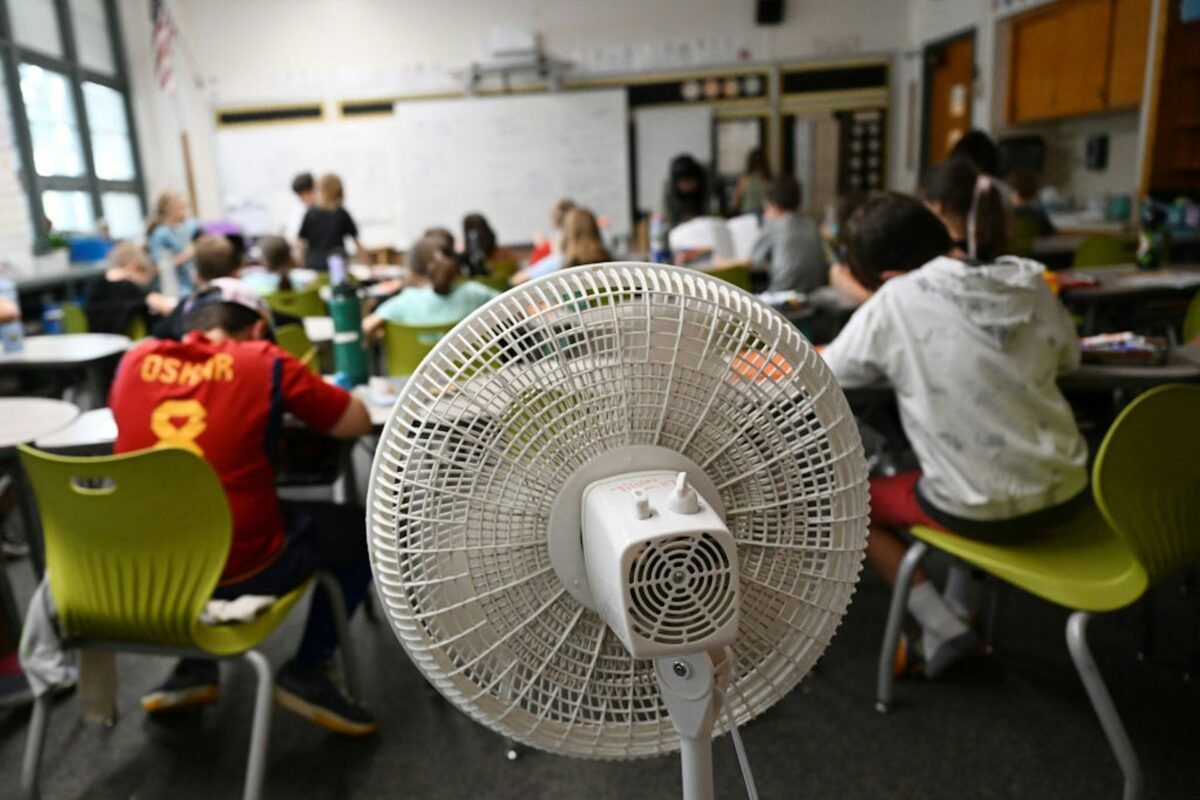
The Pittsburgh Public Schools also closed all schools in late August, moving to remote learning, because of a heat wave. Buildings either did not have or could not provide adequate cooling to ensure students were in a safe, healthy environment for learning.
The average age of a Pennsylvania school building is 70 years, about 20 years older than the national average. Pittsburgh Public School buildings average 90 years old.
Mold and health
Molds are a type of fungus. They produce tiny single-cell reproductive units called spores, and when they land in damp indoor environments, they can grow and grow and grow. When there is mold in a building, it releases spores, allergens and other irritants that can cause both immediate and long-term health effects.
Short-term exposure to mold can cause sinus congestion, coughing, wheezing, eye irritation and skin rashes. Long-term exposure can lead to long-term health consequences, including chronic bronchitis or asthma, inflammation of the lungs, headaches, memory loss and fatigue.
Remediation of mold is a challenging process – one that requires immediate action, as mold spreads fast and does more damage to property and health the longer it grows. Buildings with mold must clean up or remediate the mold and remove the water or moisture that is the source of the problem, or else the mold will return.

Fly View Productions/E+ Collection via Getty Images
The Asthma and Allergy Foundation of America notes that mold can trigger severe asthma attacks in children already suffering from asthma.
Heat and health
During a September 2026 heat wave in Pennsylvania, outdoor temperatures in the Pittsburgh area reached the 90s. Under its extreme heat protocol, Pittsburgh Public Schools monitors classroom temperatures during heat waves and considers remote learning when instructional spaces reach 90 degrees or higher.
High indoor temperatures can make students uncomfortable and raise the risk of heat-related illness. The body’s ability to regulate its temperature in extremely hot environments is limited. Heat exhaustion and heatstroke are two common health effects that occur when an individual is unable to regulate their temperature.
As the body tries to cool itself, it puts strain on both the heart and kidneys. As a result, heat waves can make chronic conditions worse and cause acute kidney injuries.
Heat also affects learning. A study of 10 million students who took the PSAT found that each 1 degree Fahrenheit increase in average school-year temperature reduced learning that year by about 1%.
Other risks in older schools
Given the age of school buildings in Pennsylvania, many buildings likely contain lead paint or pipes as well as asbestos and sometimes radon.
Lead is a naturally occurring metal which, when ingested, can cause neurological problems. Lead poisoning can cause learning disabilities and developmental delays.
Health officials say no amount of lead is safe for children. In schools, lead can come from deteriorating paint or from old plumbing, where water that sits unused in pipes can pick up lead. Pennsylvania schools aren’t required to test their water for lead as long as they discuss the issue at an annual public meeting, and a provision in this year’s state budget loosened reporting rules for schools that do test.
Asbestos is a group of fibrous substances that are both fire resistant and carcinogenic. Students could be exposed to asbestos in older buildings if pipes, boilers or ducts are not properly maintained. The Asbestos Hazard Emergency Response Act requires public school districts to inspect school buildings for asbestos-containing materials and prepare a management plan to prevent and reduce exposure to asbestos.
Radon is a naturally occurring colorless, odorless gas that can cause lung cancer. It seeps into older school buildings through cracks in the foundation and open drains. The Environmental Protection Agency estimates that nearly 1 in 5 schools has at least one classroom with a short-term radon level above the action level of concern. Schools should monitor radon levels regularly and fix any high levels with mitigation systems.
Growing bodies, greater risks
“Silent Spring,” written by Pittsburgh-area native Rachel Carson, was published 64 years ago this month.
The book describes a spring when birds’ songs cannot be heard because of toxic chemicals in their environment. It documents the environmental impact on human health and the health of the birds. Carson made it ever-so clear that our environment has a significant impact on our health.
One of the basic tenets of environmental toxicology is that children are not small adults. This truth was made clear in “Silent Spring,” where Carson’s central warning was that chemicals in the environment end up in our bodies. For children, whose bodies are still developing, that exposure can carry greater risks.
The effects of mold are especially hard on the developing airways of children. Children have a higher sensitivity to not just mold spores but also indoor dampness.
Healthy indoor environments are essential for student learning. Federal and state health, environmental and educational departments offer a range of services, educational materials and grants to support schools that want to improve the indoor environments.
Read more of our stories about Pittsburgh and Pennsylvania.

Rebecca Smullin Dawson does not work for, consult, own shares in or receive funding from any company or organization that would benefit from this article, and has disclosed no relevant affiliations beyond their academic appointment.