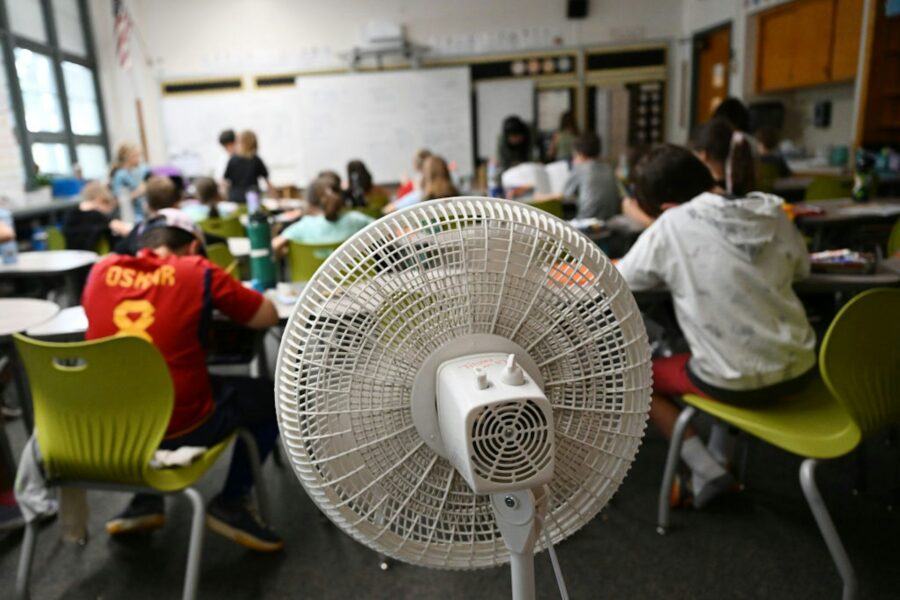
Felicita Piñón weighed just 1 pound at birth. She was later diagnosed with cerebral palsy that requires her to use a power wheelchair, and she also has learning and emotional challenges. Yet despite these obstacles, Felicita, now an eighth grade student, is just like any other happy, active teenager who hasn’t let her disability limit her. She also did something remarkable that’s not typical of most teens – in 2025, she testified against a school voucher bill at the Texas Capitol.
But in 2024, when Felicita wanted to join a cheerleading team at her Crowley, Texas, middle school, her mother, Liz Piñón, said the school was not willing to make accommodations for her, as she felt federal disabilities laws required. She believed the school was discriminating against her daughter on the basis of her disability, as well as her race. She also noted that she knew of other nearby schools that had girls in wheelchairs who participated on cheerleading teams.
As a result, Piñón – like thousands of others that year – filed a complaint with the federal Education Department’s Office for Civil Rights.
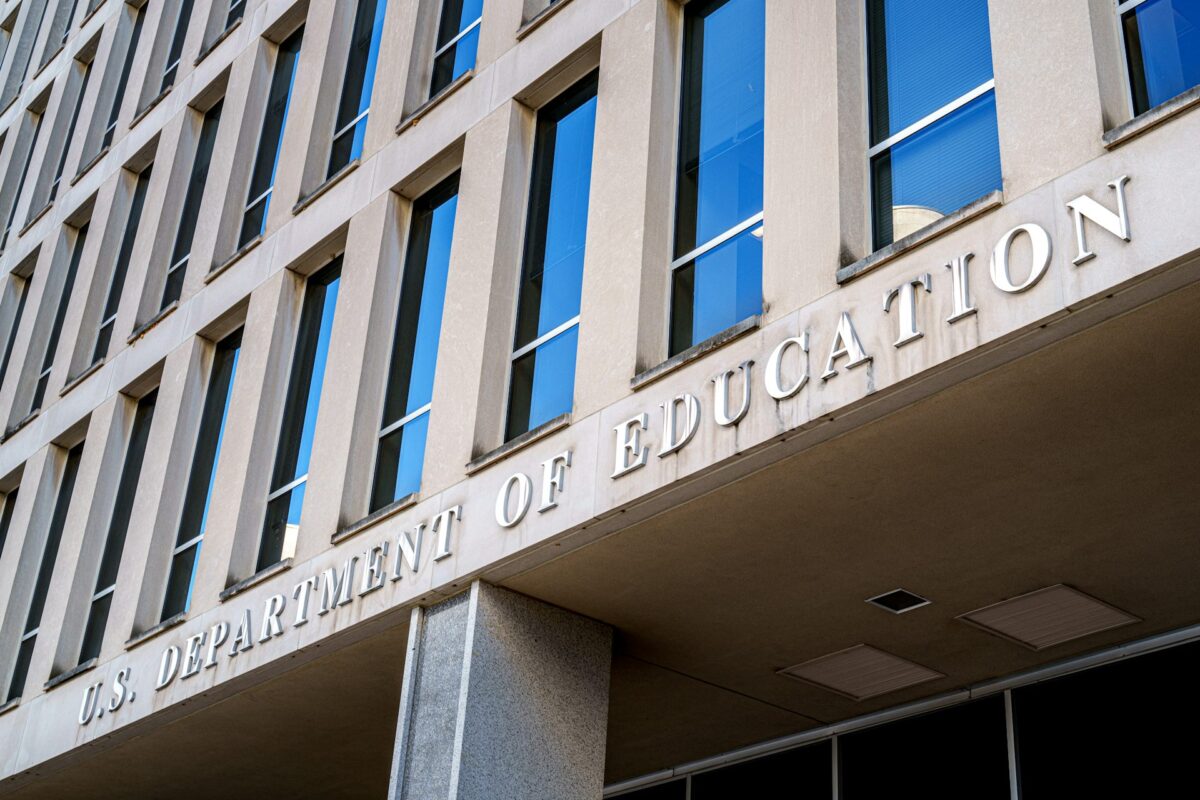
For decades, the Office for Civil Rights, or OCR, served as a critical safety net when local schools failed to meet federal disability standards. Now, sweeping budget and workforce cuts have restructured the office, leading to the dismissal of thousands of complaints without investigation and raising urgent questions about who will enforce federal special education laws when states fall short.
And while large caseloads, according to disability rights advocates, are not new for the Office for Civil Rights, parents at least used to receive confirmation that their complaint was received and being looked at. Today, however, it is not uncommon for parents to not receive confirmation – or any follow-ups to their case – even after it’s been dismissed.
Piñón’s complaint was rejected in July 2024, denied access to this link before President Donald Trump took office and ushered in the cuts at the Department of Education. It wasn’t the outcome she wanted, but it did provide her with important information and closure, and gave her comfort that she had a place to turn.
“Even though the department wasn’t perfect,” Piñón told me, “they still provided an extra layer of rights, guidance and technical assistance for schools and districts.”
As a teacher and district administrator in West Baltimore and in Washington, I’ve seen firsthand how difficult it can be for states, districts and schools to implement special education law on their own. And now as a professor and researcher at the University of Texas, I focus much of my work on improving schools for students with disabilities. I have talked to parents, advocates and school officials, many of whom are greatly concerned that cuts to the OCR will be harmful.
For parents like Piñón, the question now is not whether the system has ever worked perfectly, but whether families can continue to look to the Education Department and the Office for Civil Rights for support when states, districts and schools fail to meet their obligations in giving all children a quality education.

Lizdelia Pinon, CC BY
An office designed for equity
Since its creation in 1980, the relatively small Department of Education Office for Civil Rights has had a large task: enforcing federal civil rights laws that prohibit discrimination in schools based on race, color, national origin, sex, disability and age.
Parents often work first with their child’s teachers and principals to resolve disagreements over whether a child with disabilities is receiving adequate support in school. If parents want to escalate a complaint they feel was not dealt with, they may also reach out to district superintendents and even state officials.
Filing a civil rights complaint with the Office for Civil Rights can be parents’ last stop. This office was typically their only free direct line to connect with the Education Department.
I have seen firsthand that parents know contacting OCR can be a slow, and sometimes frustrating, process. Yet it remained an important avenue through which parents felt their concerns could be heard and elevated to a higher level.
Radio silence from OCR
In March 2025, the Education Department cut nearly half of the entire agency’s nearly 4,000-person workforce.
This included an estimated 299 out of 575 staff positions at the OCR, according to the Government Accountability Office.
After litigation challenging the cuts, some employees at the Office for Civil Rights have been reinstated. The Education Department subsequently reported in November 2025 that there were 446 staff members at the OCR, including 384 who had initially received termination notices.
Even though the office retained over 75% of its pre-Trump staff, people who submitted complaints received new point people responsible for their cases, and in some cases did not receive follow-up.
In addition, seven out of 12 regional OCR branches permanently closed around this time: Atlanta, Boston, Cleveland, Chicago, Dallas, Philadelphia and San Francisco.
Education Secretary Linda McMahon described the cuts and shifts at the department in April 2026 as necessary to increase “accountability” and “efficiency.”
Then, in June, the Education Department announced that the Department of Justice would take a larger role in civil rights investigations.
While the exact nature of these changes for students is not clear, the announcement is amplifying some advocates and families’ concern about whether an agency with limited education experience can effectively safeguard the rights of students with disabilities.
From the date of the initial cuts in March through September 2025, the Office for Civil Rights received over 9,000 new complaints of alleged discrimination and reported as resolved over 7,000 of those complaints during that time frame. About 90% of those complaints categorized as resolved were actually dismissed by the Education Department, the GAO found.
Advocates say parents are not getting responses from the department.
“We are hearing from parents it is radio silence from OCR. They are just waiting to hear anything, and they are not feeling like they are getting any feedback or being asked any details or questions,” said Robyn Linscott, director of education and family policy at the disability advocacy nonprofit The Arc of Texas, which advocates for Texans with intellectual and developmental disabilities and their families.
In some cases, filed complaints are marked as resolved “when they were never really investigated. No one went to the school and called them, or asked any questions,” Linscott told The Conversation.
Meanwhile, parents who filed complaints and did not hear back, or had their cases dismissed, are “out of options or have to try to resolve their issue with the state or hire an attorney, if they have the means to do that,” according to Denise Marshall, the CEO at Council of Parent Attorneys and Advocates, a national disability rights nonprofit.
The education legal team at Disability Rights Texas, a nonprofit legal and advocacy organization that advocates for the legal rights of Texans with disabilities, also has seen harmful changes. This organization helps parents through the process, including helping them file complaints with the OCR.
In Texas, after the Dallas Office for Civil Rights office shut its doors, Disability Rights Texas “stopped getting acknowledgments that the office received the complaints,” Colleen Potts, a supervising attorney with the organization, told The Conversation.
“We didn’t know where complaints were going, though OCR was still accepting them,” Potts said.
She directed her team’s attorneys “not to take up resources and time filing OCR complaints.”
The Office for Civil Rights didn’t respond to a request for comment.
The case for federal oversight
More than 50 years ago, Congress anticipated that families and schools would not always agree about what students with disabilities need to receive a meaningful education – or that states, districts, and schools would always implement special education law as intended.
In 1975, Congress passed an act, later named the Individuals with Disabilities Education Act, or IDEA, that established rights for students with disabilities, while giving the federal government the responsibility to monitor schools’ and states’ implementation of the law. A few years later, Section 504 of the Rehabilitation Act also allowed families to file civil rights complaints when they believed a student had been discriminated against.
The Education Department’s Office of Special Education Programs helps oversee those state reviews and provides monitoring, support and enforcement for school districts when problems persist. The Education Department has historically helped states and districts understand new legal requirements, and provided guidance and training on everything from helping schools identify students with disabilities to making sure those students receive appropriate services and accommodations.
Yet it was an imperfect system even before the recent cuts. In 2025, for example, only 21 states met federal special education requirements. And many, if not most, students with disabilities attend public schools that do not have a psychologist or social worker needed to help evaluate them.
During the 2023-24 school year, nearly every state reported special education teacher shortages.
When schools lack the personnel needed to evaluate students, coordinate services, address academic and behavioral needs and support families, students with disabilities are more likely to fall behind academically and experience poorer outcomes later in life.
Failed implementation of disability rights law in Texas
Trump’s 2025 executive order pledges to “return authority over education to the States and local communities,” a goal of many critics of federal oversight.
Yet Texas offers a cautionary reminder of what can happen when federal oversight fails, or is not present.
For years, Texas set a target that pressured school districts to keep the number of students receiving special education at or below 8.5%.
Following a federal investigation, the Office of Special Education Programs concluded in 2018 that Texas had failed to ensure that students eligible for special needs services were properly “identified, located, and evaluated” and that all children with disabilities received a free appropriate public education.
The Education Department placed Texas on a five-year corrective action plan in 2018, requiring the state to strengthen compliance with IDEA.
Yet even after federal intervention and the corrective action plan, large districts like Houston and Austin school districts struggled to meet IDEA requirements for thousands of children over several years.
In 2025, Texas met IDEA requirements for the first time in years. This followed years of federal monitoring and corrective action. Federal oversight did not eliminate every problem, but it pushed the state to identify systemic failures and created pressure for change.
“We are missing that heavy-handed, federal oversight to come in and say, ‘You messed up and here is how we are ordering you to fix it,’” said Potts, the attorney at Disability Rights Texas.

David Edward DeMatthews does not work for, consult, own shares in or receive funding from any company or organization that would benefit from this article, and has disclosed no relevant affiliations beyond their academic appointment.