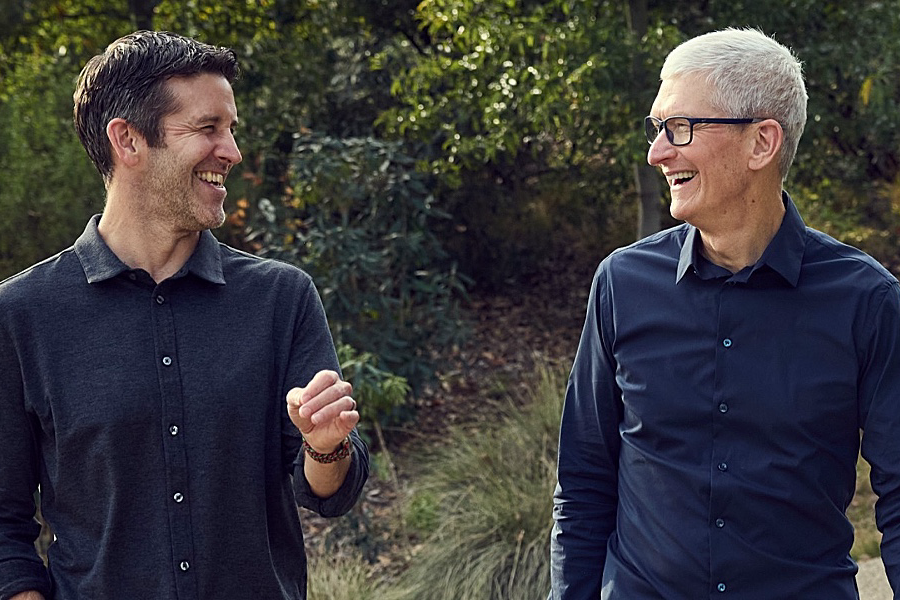
Tim Cook has stepped down as Apple’s chief executive after nearly 15 years at the helm, handing control of the world’s most valuable technology company to John Ternus at a time when Apple faces a very different set of challenges from those Cook inherited.
Ternus, Apple’s senior vice president of hardware engineering, formally became CEO on September 1. Cook has moved to the role of executive chairman, allowing him to remain involved with the company while giving Ternus responsibility for its day-to-day leadership.
The transition marks the end of one of the most consequential periods in Apple’s history.
Cook became CEO in 2011 after succeeding co-founder Steve Jobs. Rather than trying to replicate Jobs’ product-driven leadership style, Cook built Apple around operational efficiency, a powerful global supply chain and the expansion of services around the iPhone.
The results were extraordinary. Apple’s market value has grown from roughly $350 billion when Cook took over to more than $4.5 trillion, while the company expanded its business beyond the iPhone into wearables, services and other products.
But the company Cook hands over is also facing questions that are harder to answer through the playbook that produced those gains.
Chief among them is artificial intelligence.
Apple has fallen behind rivals such as Google and other major technology companies in the race to develop and deploy generative AI. Its efforts to improve Siri and build Apple Intelligence have faced delays, forcing the company to rely more heavily on outside technology and partnerships as it tries to catch up.
That makes Ternus’ promotion significant. Unlike Cook, who was known primarily as an operations executive before becoming CEO, Ternus is an engineer who has spent his career working on Apple’s hardware.
He joined Apple in 2001 and eventually became responsible for hardware engineering across major product lines. He has been closely involved with products including the iPhone, iPad, Mac, Apple Watch and AirPods, making him a familiar figure within Apple’s product organisation.
His appointment also suggests that Apple is looking for continuity rather than a dramatic break with its existing culture.
Yet Ternus inherits a company under pressure to demonstrate that it can still produce the kind of defining products that made Apple synonymous with technological innovation.
The Vision Pro has struggled to generate the impact Apple hoped for, while the company’s abandoned electric-car project demonstrated the difficulty of expanding into entirely new markets. At the same time, Apple must navigate increasing pressure to diversify manufacturing beyond China and manage complicated relationships with governments and regulators around the world.
Cook is expected to remain useful in that area. As executive chairman, he will continue to have a role in Apple’s relationships with governments and other external stakeholders, including its strategically important relationship with China.
The timing of the handover is also notable. Ternus takes charge just as Apple approaches another major iPhone launch, giving the new CEO an immediate opportunity to establish his leadership while the company remains heavily dependent on its flagship product.
For Cook, the transition closes a 15-year tenure in which Apple became a substantially larger and more diversified business. For Ternus, the challenge is different: maintaining that financial strength while convincing investors and consumers that Apple can regain momentum in the technologies that will define its next decade.
The question facing the new CEO is therefore not whether Apple remains powerful. It is whether a company that mastered the smartphone era under Cook can establish an equally strong position in the age of artificial intelligence.