Nigeria’s National Peace Policy is a framework intended to bring greater coordination to conflict prevention and peacebuilding
Originally published on Global Voices
ACC. H. O. Idoko, Nigeria Security and Civil Defense Corps (NSCDC) representative, speaking at the National Peace Policy review in Abuja, 4-6 August, 2026. Photo by Triple Peace Africa. Used with permission.
The world is spending more on war and defense than ever before. Global military expenditure reached a record USD 2.7 trillion in 2024, according to the Stockholm International Peace Research Institute (SIPRI), as governments increased spending amid wars in Europe and Western Asia and growing security tensions elsewhere.
Africa is part of that trend. Military expenditure on the continent rose by 8.5 percent in 2025 to USD 58.2 billion. Nigeria’s spending rose even more sharply, increasing by 55 percent to USD 2.1 billion, according to SIPRI.
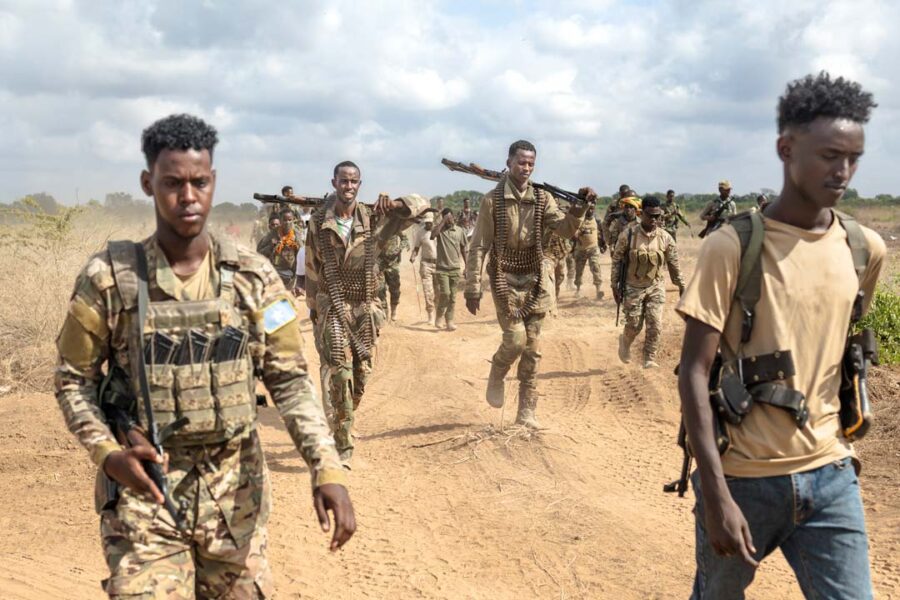
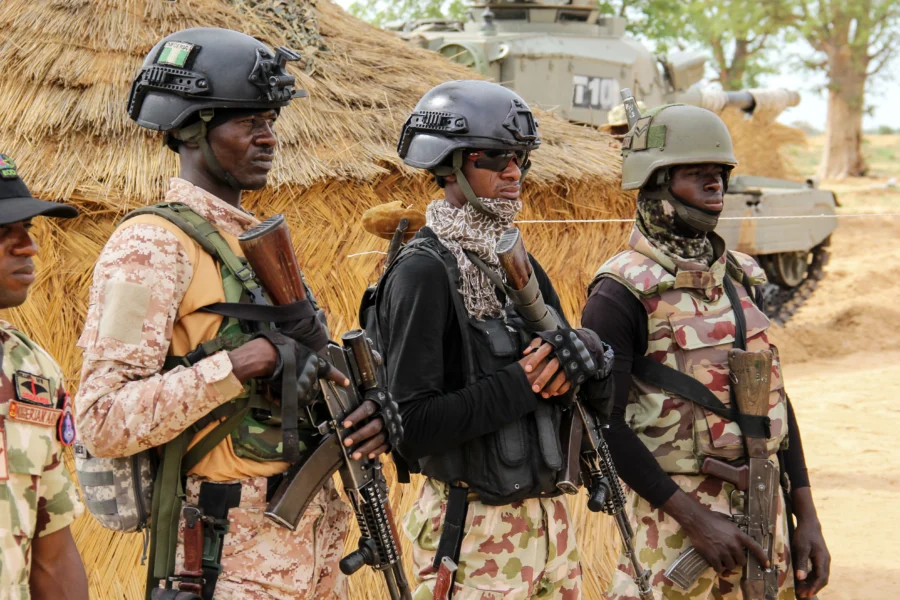
Yet for Nigeria, a bigger defense budget has not resolved a problem that has become increasingly dire. The country is confronting insurgency, banditry, mass kidnapping, communal violence, and rising organized crime, with the nature varying significantly from one region to another. Between July 2025 and June 2026, at least 7,825 people were abducted in 1,713 kidnapping-related incidents nationwide, and at least 1,142 people were killed. In July, President Bola Tinubu approved the recruitment of 28,000 additional soldiers and the creation of new army divisions, the latest in a series of moves to expand the country’s security forces.
This situation is driving lawmakers to review the country’s National Peace Policy, a framework intended to bring greater coordination to conflict prevention and peacebuilding while addressing some of the conditions that allow violence to take root and recur.

Dr. Sanda Julie, Director-General, Plateau State Peacebuilding Agency, speaking at the National Peace Policy review meeting held in Abuja, Nigeria, August 4-6, 2026. Photo by Triple Peace Africa. Used with permission.
Rethinking Nigeria’s approach to peace
Nigeria’s first attempt at a National Peace Policy dates to 2012, when the Institute for Peace and Conflict Resolution (IPCR) led the process and produced a draft. That policy was never formally adopted or operationalized. With a population of more than 240 million people and hundreds of ethnic and linguistic groups, Nigeria is one of the world’s most diverse societies. That diversity is in itself not a source of conflict. But political competition, disputes over land and resources, communal tensions, weak institutions and perceptions of exclusion often interact in the country, turning local grievances into violence.
Through August, government agencies, peacebuilding organizations, development partners and technical experts met in Abuja and in three geopolitical zones — Kano, Enugu and Lagos — to review the old policy and shape a new one that would connect federal, state and local actors.
Chris Ngwodo, director-general of Nigeria’s Office for Strategic Preparedness and Resilience (OSPRE), speaking with Global Voices in Abuja, Nigeria, says the goal is to fold conflict prevention into the country’s broader security architecture and look beyond the visible violence of armed confrontation toward the conditions that produce it.
“There are many forms of violence that are not overt violence,” he said, citing structural inequality, failures in the justice system, government neglect and a lack of opportunity as quieter but no less corrosive drivers of conflict.
Ngwodo frames the policy around a familiar idea that peace is not merely the absence of conflict but the presence of justice.
“Structural violence is invisible. Nobody can see it, but it’s present,” he said. “Subjective violence is what happens when people start fighting.” The new policy, he explained, is meant to address both by anchoring itself in restorative, retributive, and distributive justice and in equalizing opportunity.
Asked whether a new policy would solve Nigeria’s security problems, Ngwodo didn’t hesitate: “It will not.” What the document can do, he argued, is shift the country’s position from reactive firefighting toward predictive architecture by asking not just how to respond to violence, but why certain places are predisposed to it and why it keeps coming back.
“People are not fighting because they are inherently violent,” he said. The real drivers, in his account, are usually governance failures, lapses in justice administration, long-standing grievances, neglect, and limited opportunity.
Since the last policy attempt, Nigeria’s peacebuilding landscape has grown considerably. OSPRE itself didn’t exist in 2012, nor did the state peace commissions that now operate across the country. The task now, Ngwodo said, is aligning that infrastructure and scaling it up.

L-R: Director General, Institute of Peace and Conflict Resolution (IPCR), Dr Joseph Ochogwu, Chairman, House Committee on peacebuilding and social cohesion, Sadiq Tafida, Special Adviser to the Nigerian president on Homeland security, Maj Gen Adeyinka Famadewa (Rt), and Director-General, Office for Strategic Preparedness and Resilience, Chris Ngwodo at the National Peace Policy review stakeholders meeting in Abuja, Nigeria. Photo by Triple Peace Africa. Used with permission.
Beyond the military response
Nigeria has long contributed to regional peacekeeping through the Economic Community of West African States (ECOWAS) and via troops and diplomats deployed to Liberia, Sierra Leone, Guinea-Bissau, Sudan and Côte d’Ivoire. At home, however, the government’s response to insecurity has leaned heavily on the military.
At the Abuja meeting, the presidential adviser on homeland security, Maj General Adeyinka Famadewa (Rt), said Nigeria could not “shoot its way out” of its security problem. He added that while military operations can disrupt armed groups and retake territory, they’re poorly suited to resolving the political, economic, and social conditions that let violence return once an operation winds down.
A representative of Germany’s development agency, GIZ African Union Office, Chijioke Iwuamadi, made a similar case for prevention, arguing that investing in prevention and long-term peacebuilding could be more effective and less costly than repeatedly responding to crises after they erupt.
Can Nigeria afford to prevent violence?
Nigeria does not have a single conflict. It has many overlapping and regionally distinct ones. An insurgency in the northeast has run for more than a decade while banditry and mass kidnapping have destabilized rural communities in the northwest and elsewhere. Communal violence and organized crime follow their own logic.
These fault lines interact. Religion intersects with ethnicity. Land disputes become communal conflicts. Political competition deepens existing grievances, while migration, demographic change and social media, with its capacity to spread misinformation and inflammatory narratives, add further strain. That regional variation is why the policy review followed zonal consultations in an attempt to reflect local differences while still producing something that can operate nationally.
According to the Director General of the Institute of Peace and Conflict Resolution (IPCR), Joseph Ochogwu, institutionalized coordination and a clearly mapped roadmap for the implementation of peace efforts across the country’s geopolitical zones would help avoid duplication, resource wastage, institutional rivalry, and communities falling through the cracks.
Can Nigeria afford to prevent violence?
Nigeria is already spending heavily to respond to insecurity. Military spending rose sharply through 2025, with no inherent contradiction between building military capacity and investing in prevention. But the two operate at different points in the cycle of violence. One responds to threats, the other tries to reduce the conditions that generate them, and Nigeria has to decide how to divide its attention and resources between them.
More than a decade after the first policy attempt, the country’s security landscape has changed. It faces more varied forms of insecurity, with a wider range of responses from government institutions, peace commissions, and civil society organizations. Whether that coordination can translate into fewer conflicts and prevent existing ones from returning will depend on what happens after the consultations end.