Being Mozambican is a matter of belonging — regardless of one’s origin, appearance, or surname
Originally published on Global Voices
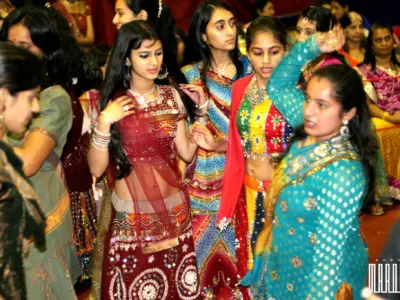
Indians in Mozambique celebrating the Hindu festival of Navratri. Image by Kash_if via Flickr. CC BY 2.0.
In Mozambique, the word monhé has a much deeper history than its everyday use might suggest. Depending on who says it and the context, it can simply be a reference to the population of Indian origin, an identity marker, or a prejudiced remark. But behind the word there is a history of migration, trade, colonialism, independence, displacement, and, above all, belonging.
The question of who is Mozambican gets particularly interesting when we look at the communities of Indian origin, who have lived in the country for several generations. Are they Mozambicans? Indians? Foreigners? Or, in some cases, stateless persons? The answer cannot be found in appearance, surname, religion, or family origin alone. It is found in the country’s history and, particularly, in its nationality law.
A presence older than modern borders
The presence of people originating from the Indian subcontinent in the lands we now call Mozambique predates the country’s independence and, in many instances, predates the demarcation of the current political borders. The Indian Ocean’s trade networks connected the East African coast to South Asia long before 1975, the year Mozambique gained its independence. Over time, merchants, families, and whole communities settled in different parts of the country.
During the Portuguese colonial period, this took place within a political structure that gave people nationalities and legal statuses according to the rules of the empire. As such, “being of Indian origin” never meant automatically “being an Indian citizen.” A person can have Indian ancestry and at the same time hold Portuguese, Indian, Pakistani, or any other nationality, which could leave people in a complex bureaucratic situation. This distinction became especially important when the empire came to an end.
1975: When the question “Whose country is this?” took on a new meaning
Mozambique’s independence, made official on June 25th, 1975, did not just mean a transfer of political power. It also implied the need to define who would legally receive the new state, which was known as the New State. The Nationality Law of 1975 was key to answering that question. Among its provisions were rules that recognized as Mozambicans certain people born in the territory and resident in Mozambique at the time of independence, as well as other criteria related to birth, family links, and residence. The legislation would thus transform a heterogeneous imperial population into a national political community.
For many families of Indian origin who lived in Mozambique for decades or generations, this transformation would mean a fundamental change: no longer being legally associated with a colonial power or a foreign nationality and becoming part of the new Mozambican nation. But the experience of this transition was not the same for everybody.
When identity doesn’t fit neatly into a passport
Decolonization created situations where identity, origin, and nationality did not match. Imagine a family history across three generations: the grandparents born in India, the parents born in Mozambique during the colonial period, and the children born after independence. Which nationality should each generation have? The answer may depend on specific legal circumstances: place of birth, the parents’ nationality, residence in Mozambique at its independence, existing documentation, and any decisions to opt for or relinquish nationality.
Here, the issue of statelessness arises. A stateless person is somebody who is not considered a national by any state’s legislation. It is not an ambiguous cultural identity or feeling divided between two countries, but a legal status.
After decolonization, some people in former colonial territories, such as Angola and Mozambique, faced this problem: some were no longer recognized as nationals by the former colonial power without any other nationalities automatically being granted. This does not mean, though, that the whole Indian community in Mozambique became stateless. This generalization would be historically and legally incorrect.
“Monhé” is not a nationality
This may be where everyday language misleads us. The term “Monhé” may be used as an identity category, but it is not a legal category. Somebody called a monhé can be as Mozambican as anybody else born or naturalized in the country. They may have been born in Maputo, Nampula, Beira, or Quelimane, speak Portuguese or another Mozambican language, have had family in Mozambique for several generations, and never have lived in India. Your ancestry does not disqualify your citizenship.
Likewise, a person of Indian origin living in Mozambique can be a citizen of another country. And, in certain cases, they may have difficulties in proving or acquiring a nationality. As such, it is important to distinguish three concepts that are often confused: origin, nationality, and citizenship. A person’s origin may be Indian. Their identity can be simultaneously Mozambican and Indian. Nationality, though, is a legal relationship between an individual and a state.
A community across oceans
The history of so-called monhés in Mozambican identity also challenges an overly simplistic view of nationality.
Mozambique has always been a space where people cross paths. Africans, Arabs, Indians, Portuguese, and other peoples participated, at different moments, in the country’s social, economic, and cultural development. The Mozambican coast, in particular, cannot be understood without movements across the Indian Ocean.
This is why it may be inappropriate to think of the Indian diaspora as forever an “outsider” population. For many of these families, Mozambique is not simply the country where they live. It is the country where they were born, where their parents were born, where their ancestors are buried, and where they built their lives. India may be their family origin. Mozambique is, for many, a homeland.
The ongoing question
Around half a century after independence, the question of nationality continues to be more than a matter of just documents. It is a question of recognition. Who has the right to say “I am Mozambican”? Is it enough to have been born in the country? Have Mozambican parents? Have lived in the country for decades? Participate in society? Speak its languages? Share a collective memory? Or will some people continue to be seen as foreigners by many, despite legally being citizens? It is in this space between the law and general perception that many identities exist.
This evokes the concept of a “bridge” — Mozambique’s Indian-origin community historically finds itself between different spaces: Africa and Asia, family tradition and national identity, migratory memory and territorial belonging. But being between two shores does not necessarily mean not belonging to either. Sometimes it means belonging to both. And, for some, it means discovering that their family history crossed oceans long before modern passports decided which country a person belonged to.
The history of Mozambique’s monhés is thus also a history about the very meaning of being Mozambican. Not a story of people who simply “came from outside,” but a story of people who, over generations, helped build the country, while continuing to negotiate, within their families and wider society the fundamental question that follows all those who migrate: where, in the end, is home?