The UK government plans to introduce “cot cams” across neonatal units after the Thirlwall Inquiry exposed major failures at the hospital where Lucy Letby worked.
Health Secretary Yvette Cooper has asked officials to develop the plans urgently. She announced the move after publication of the inquiry’s final report on Tuesday.
The report recommends cameras in every cot and incubator on neonatal wards. The systems would provide live video feeds for authorised users, including parents.
Cooper said cameras could also help parents stay connected with babies when they cannot remain at the hospital.
The government has not yet announced a national installation date. It also has not confirmed the final design or funding arrangements.
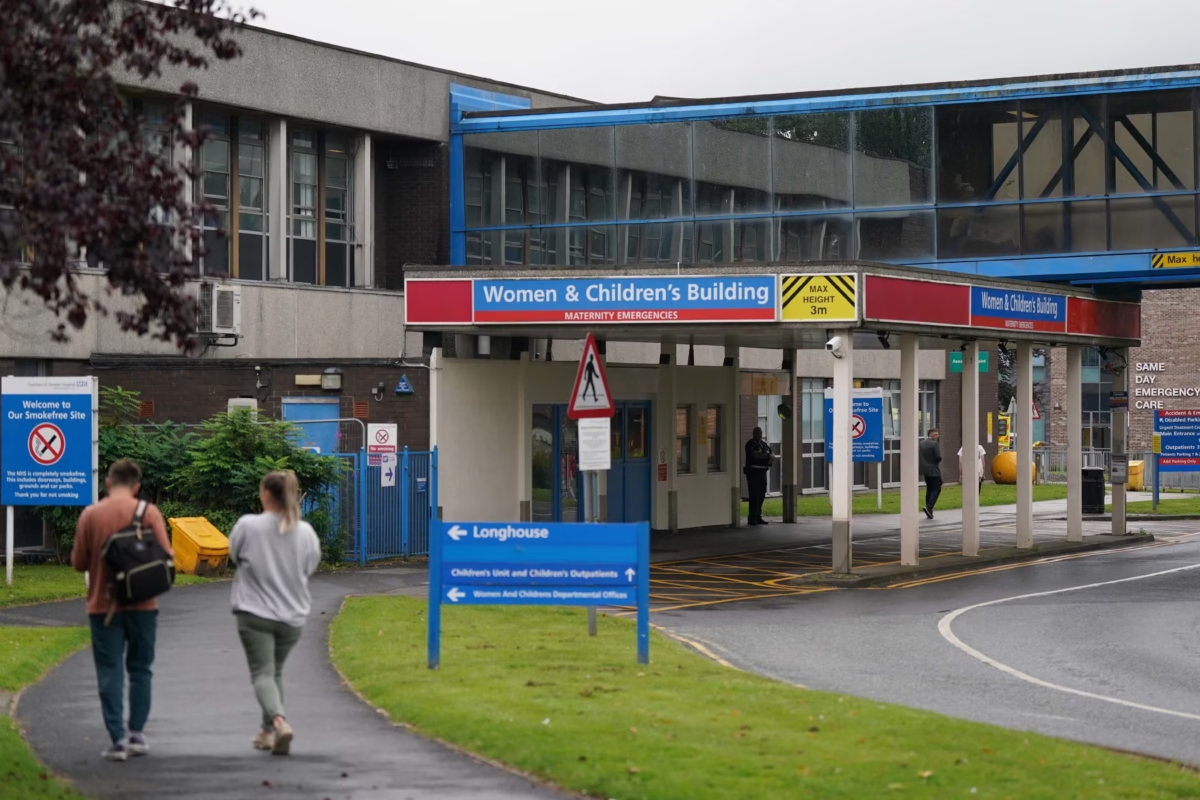
The recommendation follows the inquiry’s findings about serious failures at the Countess of Chester Hospital in Cheshire.
Lady Justice Kathryn Thirlwall said the hospital suffered a “complete failure” to protect babies. She found major weaknesses in management, safeguarding and communication.
The inquiry examined events surrounding Letby’s crimes and the hospital’s response to warning signs. It did not examine whether her criminal convictions were correct.
Letby, 36, remains in prison after convictions for murdering seven babies and attempting to murder seven others. She received whole-life orders and continues to maintain her innocence.
The inquiry found that earlier action could have changed the outcome for several babies.
It concluded that three babies might have survived if hospital staff had acted sooner. Seven other babies might also have avoided harm.
The report says doctors raised concerns about unusual deaths and collapses on the neonatal unit. Senior managers failed to respond with appropriate safeguarding measures.
The inquiry found that hospital leaders focused too heavily on internal disputes and reputational concerns. They also delayed contacting police about their suspicions.
That delay allowed Letby to remain at the hospital after doctors had raised concerns.
The report says the hospital should have removed Letby from the neonatal unit sooner. It also says doctors should have acted on abnormal insulin test results linked to one baby.
Those findings form a central part of the case for stronger monitoring and escalation systems.
Cameras and accountability
The proposed cameras would serve a broader purpose than surveillance alone.
They could give parents a clearer view of their babies’ care. They could also create an additional record when staff suspect an incident or unexplained deterioration.
The inquiry recommends live-streaming cameras rather than simple recording systems. It wants every neonatal cot and incubator to have access to the technology.
The recommendation reflects concerns raised during the inquiry by parents and other witnesses. Some parents said cameras could improve visibility and deter unsafe conduct.
The technology would not replace clinical monitoring or safeguarding procedures. Hospitals would still need clear rules for access, storage and use of footage.
Privacy will also remain a major issue. Neonatal units contain highly sensitive medical information, and several babies may occupy the same clinical space.
Any national system will therefore need strict controls over who can watch or retrieve footage.
Wider failures at the hospital
The inquiry placed responsibility beyond one nurse.
It criticised senior executives and nursing leaders for failing to respond to repeated warnings. It also found serious problems in the relationship between doctors and managers.
The report described a culture in which some nurses showed strong loyalty to Letby. That loyalty contributed to resistance against concerns raised by consultants.
Managers also turned their attention toward doctors who questioned Letby’s role. The inquiry found that the response discouraged staff from escalating their concerns.
Police did not receive a formal referral from the hospital until May 2017. Letby had already left the neonatal unit by then, but she remained employed by the trust.
The Care Quality Commission also acknowledged shortcomings in its oversight. Its inspections did not identify the significance of the rising neonatal mortality rate.
The inquiry has recommended changes across neonatal care and hospital governance.
These include stronger safeguards around insulin, clearer procedures for suspected deliberate harm and improved escalation of concerns.
The government also plans a new maternity and neonatal commissioner. Cooper said officials would track progress on the inquiry’s recommendations.
A warning for the NHS
The cot-cam proposal represents one of the most visible responses to the inquiry.
It also reflects a wider shift toward stronger transparency in neonatal care.
The cameras could help parents monitor care from outside the ward. They could also provide evidence when clinicians need to investigate an unexplained event.
But technology alone cannot fix the failures identified by Thirlwall.
The inquiry found that staff raised concerns before hospital leaders took decisive action. Better cameras would not solve a system that ignores warnings.
The central challenge now lies in implementation.
The government must decide how hospitals will install and operate the systems. It must also protect babies’ privacy and prevent misuse of sensitive footage.
For families affected by the Letby case, the recommendations come after years of unanswered questions.
For the NHS, the report sets a tougher test. Hospitals must act when staff raise credible concerns about patient safety.
The proposed cameras may improve visibility. The deeper reform will depend on whether leaders act when that visibility reveals a problem.