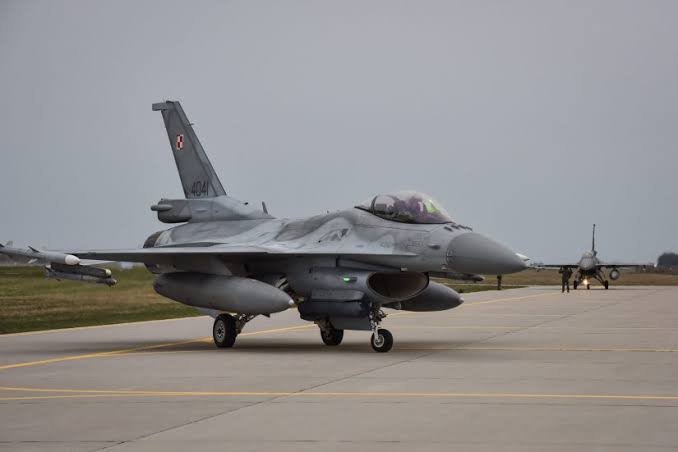
Poland scrambled military aircraft after a drone entered the airspace of a European NATO ally, in an incident that has renewed concerns about the spillover risks from Russia’s war in Ukraine.
NATO aircraft reportedly shot down the unmanned aerial vehicle after it crossed into the airspace of a member state. Polish forces placed their air-defence systems on heightened alert and launched aircraft to monitor the situation and protect national airspace.
The incident came as Russia intensified drone and missile attacks against Ukraine, increasing the risk that weapons or unmanned aircraft could cross national borders. NATO members along the alliance’s eastern flank have repeatedly warned that the war is creating a growing threat from airspace violations, debris and possible deliberate probing operations.
Poland has become one of the alliance’s most vigilant members because of its proximity to Ukraine and Belarus. Its armed forces have scrambled jets several times during major Russian attacks on Ukraine when missiles, drones or other aerial objects approached or entered Polish airspace.
NATO Faces Growing Drone Threat on Eastern Flank
The latest incident highlights the difficulty of distinguishing between an accidental incursion, a malfunctioning drone and a deliberate operation intended to test NATO’s response.
Drones can travel long distances, operate at low altitude and present a smaller radar signature than conventional aircraft. Their use in the Ukraine war has also increased the likelihood that unmanned systems may stray across borders or be used to gather intelligence on neighbouring countries.
NATO has strengthened its eastern defences since Russia launched its full-scale invasion of Ukraine in February 2022. Poland hosts allied forces and has expanded its own air-defence capabilities, while NATO members have increased air policing and surveillance missions across the Baltic and eastern European region.
The alliance has also faced a series of incidents involving unidentified drones and suspected Russian-linked aerial activity. Lithuania recently briefed NATO and European Union partners after a drone believed to have originated from Belarus was shot down by NATO aircraft. The episode prompted renewed calls for stronger monitoring and defensive measures along the alliance’s eastern border.
The incidents do not automatically indicate that Russia or Belarus has launched an attack against NATO. However, repeated airspace violations can create pressure for rapid military decisions and increase the possibility of miscalculation.
Poland’s response reflects that concern. Scrambling fighter jets allows the military to identify and track an approaching object, while ground-based air-defence units can prepare to respond if the object poses a direct threat. The decision to shoot down a drone depends on factors including its trajectory, identification, proximity to sensitive sites and the perceived risk to civilians.
NATO has not indicated that the latest incident triggered a collective-defence response under Article 5 of the North Atlantic Treaty. Such a provision applies to an armed attack against one or more members and would require a political decision by the alliance. A single drone incursion, particularly when attribution remains uncertain, does not automatically meet that threshold.
The incident nevertheless adds to the security burden facing Poland and other countries bordering Russia, Belarus and Ukraine. As drone warfare expands, NATO governments must prepare for more frequent airspace alerts, possible incursions and difficult decisions over when an unidentified object represents a genuine military threat.
For Poland, the immediate priority remains protecting its airspace while avoiding escalation. For NATO, the broader challenge is to ensure that Russia’s war against Ukraine does not produce an uncontrolled chain of incidents across the alliance’s eastern frontier.