A trove of military documents, videos and intercepted communications has provided the most detailed public evidence yet that Sudan’s army developed and used chlorine-based weapons during the country’s civil war, according to parallel investigations by The Washington Post and The New York Times.
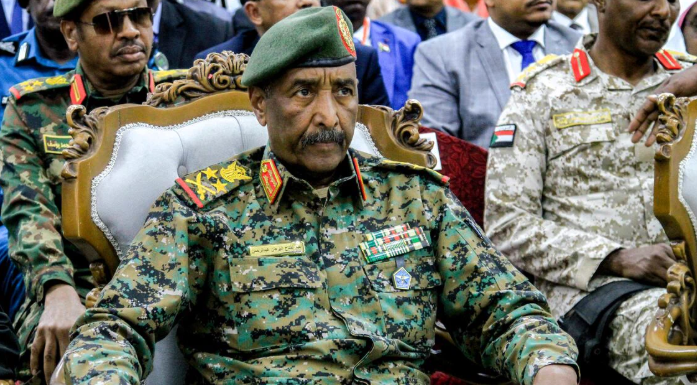
The material outlines a covert programme that began in mid‑2024 as the Sudanese Armed Forces (SAF) struggled to push paramilitary fighters out of Khartoum, and it appears to link the effort to senior leadership, including army chief and de facto head of state Gen. Abdel Fattah al‑Burhan. Sudan’s military has denied developing or using chemical weapons.
The files, handed to the two newspapers by an unidentified Middle Eastern intelligence agency, include bomb designs, photographs of suspected production sites, videos of desert tests, and text and voice messages among senior officers. Le Monde, citing two security sources, reported the material originated with Israeli intelligence, though that attribution has not been independently confirmed.
Experts consulted by The Washington Post described the cache as credible evidence of a chemical weapons programme, while cautioning that independent investigators would still need site access and witness interviews to reach a definitive conclusion.
According to the documents, the effort began in July 2024, when the army was trying to dislodge paramilitary forces from entrenched positions across Khartoum. Brig. Gen. Tariq Hussain emerges in the reporting as a central figure: messages attributed to him describe prototypes that paired explosive warheads with roughly 15 kilograms of chlorine gas.
One test on 22 July reportedly involved an Antonov cargo aircraft flying from Merowe airport to a remote desert location. Afterward, Hussain allegedly told colleagues the device had hit its target and released the gas, prompting another senior officer to urge “strict secrecy,” The New York Times reported.
By October 2024, the programme appears to have moved from experimentation to production. Messages cited by The Washington Post indicate that almost 300 chemical munitions had been manufactured, with many stored at Merowe Air Base; another message suggested 106 had been used.
Diverting civilian chlorine
The alleged programme relied in part on chlorine with legitimate civilian uses. Chlorine is widely used in water treatment and cholera control, making it more accessible than tightly controlled chemical agents. The Times reported that Hussain discussed obtaining chlorine cylinders from the Al‑Manara water treatment plant in Omdurman, which had received supplies from international humanitarian organisations.
UNICEF confirmed it supplied chlorine to several Khartoum water facilities between 2023 and 2025 but said it had no record of its supplies being diverted. If borne out, the alleged diversion would mean material intended to protect civilians from disease was repurposed as a weapon component.
The new evidence also adds context to long‑standing allegations about two suspected chlorine attacks in September 2024 at the Al‑Jaili refinery north of Khartoum, a key military position the army sought to retake without destroying critical infrastructure. France 24 and the research organisation C4ADS previously reported that Sudanese military aircraft dropped containers containing chlorine over the refinery on 5 and 13 September 2024; they traced photographed canisters at the site to an Indian supplier that said it had exported them for water‑treatment purposes.
The dossier broadens that picture by including communications indicating officers were producing chlorine munitions and discussing their use against entrenched fighters. One message attributed to Hussain and cited by The Washington Post reportedly celebrated the effects of a chlorine attack by saying the fighters had “drunk the gas.”
US sanctions and prior intelligence
The United States had already concluded that Sudan used chemical weapons before the dossier became public. In May 2025, the US government sanctioned Burhan over what it described as Sudan’s use of chemical weapons, though officials did not at the time disclose their evidence.
New reporting suggests American intelligence had access to some of the same material beforehand. The New York Times reported that US officials received some of the visuals in January 2025 while assessing whether Sudan possessed chemical weapons. That helps explain why the sanctions announcement appeared unusually specific despite the absence of publicly released evidence at the time.
If independently confirmed, the development of a chlorine weapons programme would mark a serious escalation in the conduct of Sudan’s war. Sudan signed the Chemical Weapons Convention in 1999, which prohibits the development, production, stockpiling and use of chemical weapons.
The dossier does more than allege battlefield use. It appears to document an organised effort involving procurement, design, testing, production and deployment, with communications implicating senior officers. Burhan has denied that his forces developed or used chemical weapons, and after the US sanctions, Sudan announced an investigation into the allegations. The government later said its inquiry found no evidence of chemical or radioactive contamination.
That inquiry’s credibility has itself been questioned. According to The Washington Post, a document establishing the investigation included Hussain, the alleged architect of the chemical weapons programme, because of his supposed expertise. That raises a difficult question for any future international investigation: whether the Sudanese military can credibly probe allegations involving its own senior officers while the conflict continues.
Why the evidence has emerged now
The timing of the revelations matters. The dossier has surfaced as international pressure grows for the UN Security Council to expand its arms embargo from Darfur to the rest of Sudan. The existing sanctions regime covers arms transfers and related assistance to actors operating in Darfur, while the United States has proposed extending the restrictions nationwide.
On 24 August, US Senior Adviser for Arab and African Affairs Massad Boulos urged the Security Council to extend the embargo across Sudan and called for stronger measures against the transfer of drones and related technologies. The new chemical weapons evidence adds a different argument to that debate: the issue is no longer only whether foreign weapons are prolonging the war, but also whether one party has developed prohibited weapons using material obtained through international supply chains.
That distinction could prove important as the Security Council considers whether existing restrictions are sufficient. The allegations also place greater scrutiny on the foreign relationships surrounding Sudan’s military, as the war has increasingly drawn weapons, financing and military technology from countries including Turkey, Saudi Arabia and Pakistan.
The provenance of the dossier adds another layer to that contest. If Le Monde’s reporting about its Israeli intelligence origins is correct, the decision to release the material comes from a country with its own strategic interests in Sudan and the Red Sea. That does not invalidate the evidence, but it makes the provenance and timing worth examining alongside the substance of the allegations.
For now, the new material significantly strengthens the case that Sudan’s military developed a chlorine weapons programme during 2024 and may have used those weapons in the war. It also gives greater context to the US decision to sanction Burhan in 2025, while leaving important questions about the scale of the programme, the full extent of its use and the chain of command unresolved.
Those questions will ultimately require independent investigators to examine the alleged production sites, weapons and witnesses. Until then, the dossier offers a detailed and deeply troubling account of how a conventional battlefield struggle may have crossed into chemical warfare.